
A koi pond can transform an ordinary garden into a beautiful and relaxing outdoor space. Whether you want to create a peaceful backyard retreat, enhance your landscape design, or build a thriving habitat for ornamental koi fish, proper koi pond installation is essential for long-term success.
Unlike standard garden ponds, koi ponds require careful planning, adequate depth, efficient filtration systems, and proper water circulation to support healthy fish and maintain water quality. A well-designed koi pond not only becomes a focal point of your landscape but also provides a sustainable environment where koi can thrive for years.
This complete guide explains everything homeowners need to know about koi pond installation, including planning, construction, filtration, maintenance, and common mistakes to avoid.
What Is a Koi Pond?
A koi pond is a specially designed outdoor pond built to house koi fish. Unlike decorative water features, koi ponds are engineered to support aquatic life through proper filtration, aeration, and water circulation systems.
Koi fish are known for their vibrant colors, graceful movement, and long lifespan. With proper care, some koi can live for decades, making pond design and construction particularly important.
A successful koi pond combines beauty with functionality by incorporating water features, filtration equipment, aquatic plants, and landscaping elements that create a balanced ecosystem.
Benefits of Koi Pond Installation
Creates a Stunning Landscape Feature
A professionally designed koi pond adds visual interest and elegance to gardens, villas, and outdoor living spaces. The combination of moving water, colorful fish, and surrounding landscaping creates a striking focal point.
Encourages Relaxation
The sound of flowing water combined with the gentle movement of koi fish helps create a peaceful outdoor environment that promotes relaxation and stress reduction.
Enhances Property Value
Well-designed water features often improve curb appeal and increase the perceived value of residential and commercial properties.
Supports a Natural Ecosystem
Koi ponds can support beneficial bacteria, aquatic plants, and wildlife while creating a balanced aquatic environment.
Planning Your Koi Pond Installation
Proper planning is one of the most important stages of koi pond installation.
Before excavation begins, consider the following factors:
Location
Choose a location that:
- Receives partial sunlight
- Avoids excessive leaf fall from trees
- Has access to electricity
- Allows easy maintenance
- Provides visibility from key viewing areas
Pond Size
Larger ponds are generally easier to maintain because water conditions remain more stable.
Many koi pond specialists recommend a minimum size that allows fish adequate swimming space and supports future growth.
Pond Depth
Depth is one of the most critical factors in koi pond design.
A shallow pond can experience temperature fluctuations and provide insufficient space for fish.
Most koi ponds are designed deeper than standard decorative ponds to provide a healthier environment for koi.
Essential Components of a Koi Pond
Pond Liner
The pond liner creates a waterproof barrier that prevents water loss and protects the surrounding soil.
Filtration System
A high-quality filtration system removes waste and helps maintain healthy water conditions.
Most koi ponds use:
- Mechanical filtration
- Biological filtration
- Water circulation systems
Pond Pump
The pump circulates water through the filtration system and helps oxygenate the pond.
Aeration System
Aeration improves oxygen levels and supports beneficial bacteria that help maintain water quality.
Bottom Drain
Bottom drains help remove debris and fish waste before it accumulates within the pond.
Pond Skimmer
A skimmer collects floating debris such as leaves and organic material from the water surface.
UV Clarifier
UV clarifiers help control algae growth and improve water clarity.
Step-by-Step Koi Pond Installation Process
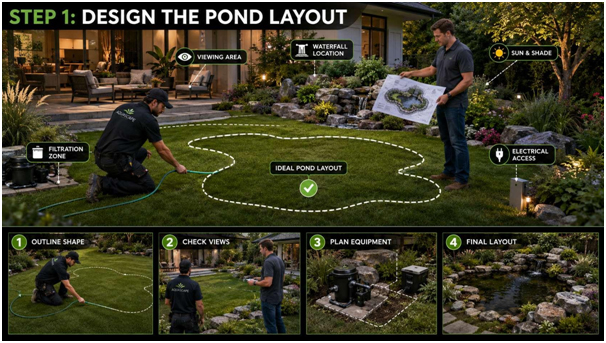
Step 1: Design the Pond Layout
Every successful koi pond installation starts with proper planning and design. Before any excavation begins, determine where the pond will be located and how it will fit within your landscape.
Use a garden hose, rope, or spray paint to outline the pond shape on the ground. Walk around the proposed area and view it from different angles to ensure it complements your outdoor space.
Consider:
- Viewing areas from patios, windows, and seating spaces
- Available sunlight and shade
- Future landscaping plans
- Waterfall or stream locations
- Filtration system placement
- Electrical access for pumps and lighting
A well-planned layout improves both the appearance and functionality of the koi pond.
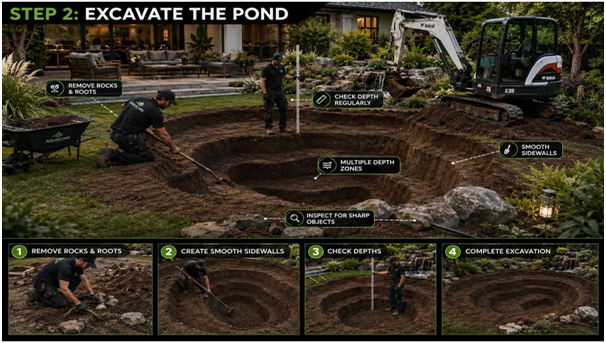
Step 2: Excavate the Pond
Once the layout is finalized, begin digging according to your planned dimensions.
Koi ponds should be deep enough to provide a stable environment for fish while allowing proper water circulation. Consider creating multiple depth zones to support aquatic plants and improve the pond’s visual appeal.
During excavation:
- Remove rocks and roots
- Create smooth sidewalls
- Check depth measurements regularly
- Maintain consistent slopes where necessary
After excavation is complete, inspect the entire pond area for sharp objects that could damage the liner.
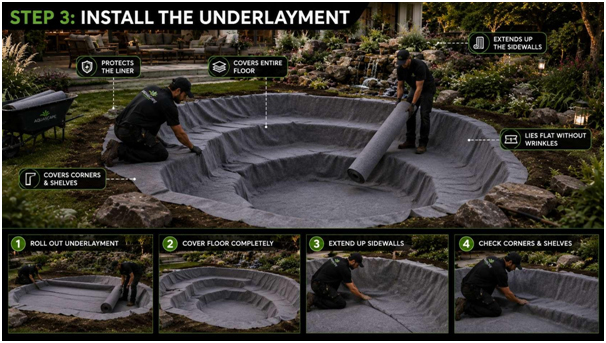
Step 3: Install the Underlayment
Before placing the pond liner, install a protective underlayment across the entire excavation area.
The underlayment acts as a cushion between the soil and liner, helping prevent punctures from rocks, roots, and ground movement over time.
Ensure the material:
- Covers the entire pond floor
- Extends up the sidewalls
- Lies flat without wrinkles
- Covers corners and shelves completely
This additional layer can significantly increase the lifespan of your pond liner.
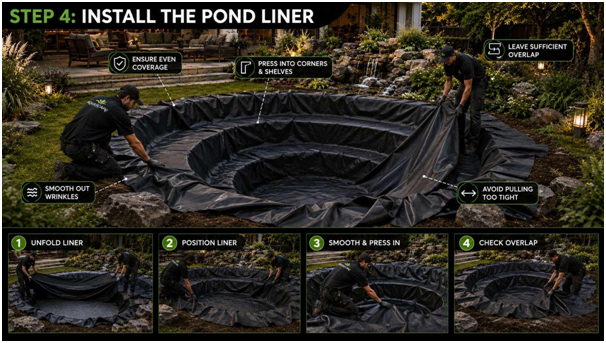
Step 4: Install the Pond Liner
Carefully unfold and position the pond liner over the underlayment.
Allow enough excess material around the edges to secure the liner later. Avoid pulling the liner too tightly, as it will naturally settle once water is added.
As you position the liner:
- Smooth out major wrinkles
- Press the liner into corners and shelves
- Ensure even coverage throughout the pond
- Leave sufficient overlap around the perimeter
Taking extra time during this stage can prevent future leaks and installation issues.
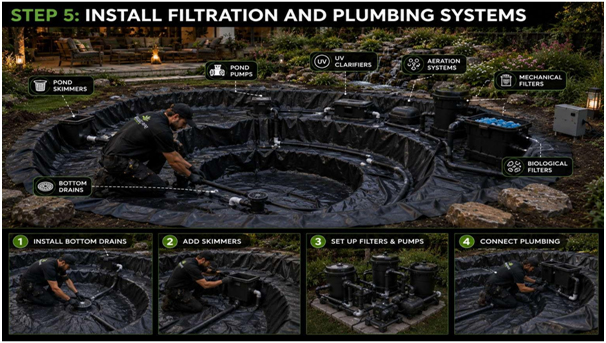
Step 5: Install Filtration and Plumbing Systems
A high-quality filtration system is essential for maintaining healthy water conditions and supporting koi fish.
Install all plumbing components before filling the pond, including:
- Pond pumps
- Mechanical filters
- Biological filters
- Bottom drains
- Pond skimmers
- Aeration systems
- UV clarifiers
Ensure all pipe connections are secure and accessible for future maintenance. Proper filtration and water circulation help maintain water clarity and reduce harmful waste buildup.
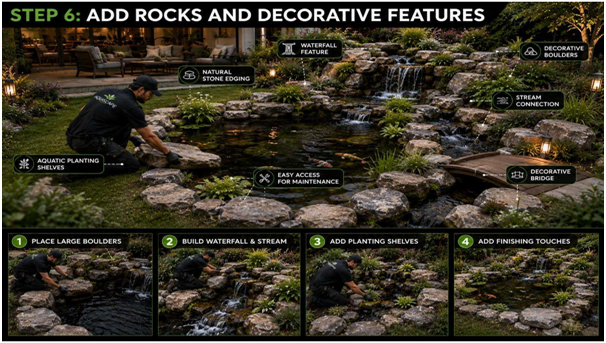
Step 6: Add Rocks and Decorative Features
After the liner and filtration system are installed, begin adding decorative elements.
Popular koi pond features include:
- Natural stone edging
- Decorative boulders
- Waterfalls
- Streams
- Bridges
- Aquatic planting shelves
Arrange these features carefully to create a natural appearance while maintaining easy access for cleaning and maintenance.
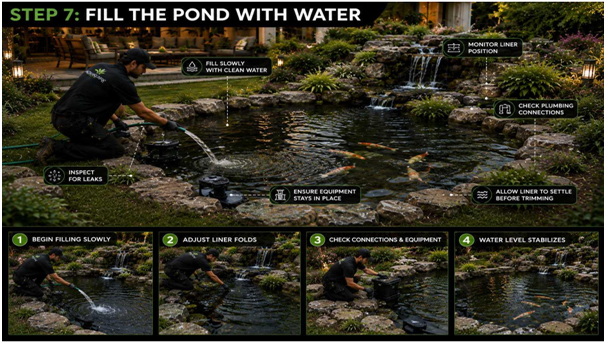
Step 7: Fill the Pond with Water
Begin filling the pond slowly with clean water.
As the pond fills:
- Monitor the liner position
- Adjust folds where necessary
- Check plumbing connections
- Inspect for leaks
- Ensure all equipment remains properly positioned
Allow the liner to settle naturally under the weight of the water before trimming any excess material.
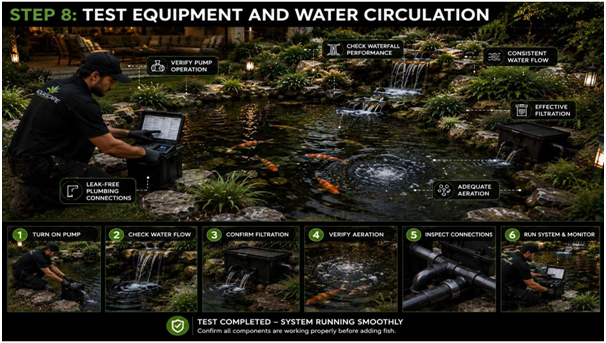
Step 8: Test Equipment and Water Circulation
Before adding fish, test all pond equipment thoroughly.
Run the entire system and verify:
- Proper pump operation
- Consistent water flow
- Effective filtration
- Adequate aeration
- Waterfall performance
- Leak-free plumbing connections
This testing phase allows you to identify and correct any issues before the pond becomes fully operational.
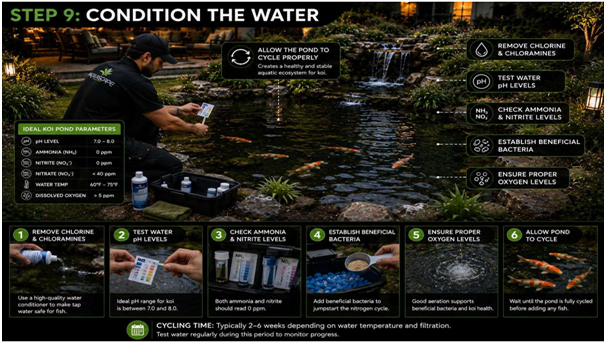
Step 9: Condition the Water
Fresh tap water is not immediately suitable for koi fish.
Before introducing fish:
- Remove chlorine and chloramines
- Test water pH levels
- Check ammonia and nitrite levels
- Establish beneficial bacteria within the filtration system
- Ensure proper oxygen levels
Allow the pond to cycle properly before adding koi. This process helps create a healthy and stable aquatic ecosystem.
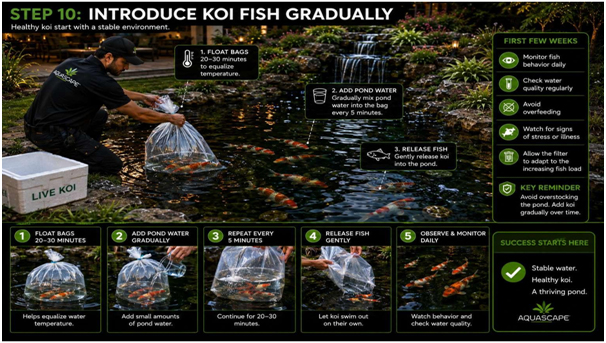
Step 10: Introduce Koi Fish Gradually
Once water quality is stable, you can introduce koi fish.
Float the transport bags in the pond for approximately 20–30 minutes to help equalize water temperatures. Gradually mix pond water into the bags before releasing the fish.
For the first few weeks:
- Monitor fish behavior daily
- Check water quality regularly
- Avoid overfeeding
- Watch for signs of stress or illness
Introducing koi gradually helps reduce stress and allows the biological filtration system to adapt to the increasing fish load.
heir behavior carefully during the first few weeks.
Avoid overstocking the pond.
Common Koi Pond Installation Mistakes
Many pond problems can be traced back to mistakes made during installation.
Common issues include:
- Building a pond that is too shallow
- Installing inadequate filtration
- Choosing the wrong location
- Poor water circulation
- Overstocking fish
- Neglecting maintenance access
- Using undersized pumps
Avoiding these mistakes can significantly improve long-term pond performance.
Koi Pond Maintenance Tips
Proper maintenance is essential for healthy fish and clear water.
Weekly Maintenance
- Remove debris
- Check water levels
- Inspect fish health
- Clean skimmer baskets
Monthly Maintenance
- Inspect pumps
- Clean filtration equipment
- Test water quality
- Check aeration systems
Seasonal Maintenance
- Prune aquatic plants
- Inspect plumbing
- Evaluate filtration performance
- Perform system upgrades if necessary
How Much Does Koi Pond Installation Cost?
The cost of koi pond installation varies based on:
- Pond size
- Pond depth
- Filtration systems
- Waterfall features
- Landscaping requirements
- Decorative stonework
- Lighting systems
Custom koi ponds with advanced filtration and premium finishes generally require a larger investment but offer superior performance and durability.
Frequently Asked Questions
How deep should a koi pond be?
Koi ponds are typically designed deeper than decorative ponds to provide stable water conditions and sufficient swimming space.
Do koi ponds require filtration?
Yes. Filtration is one of the most important components of any koi pond and is essential for maintaining water quality.
Can koi ponds include waterfalls?
Absolutely. Waterfalls improve aesthetics, increase oxygen levels, and enhance water circulation.
How many koi fish can a pond support?
The number depends on pond size, depth, filtration capacity, and overall ecosystem balance.
How often should a koi pond be cleaned?
Routine maintenance should be performed weekly, while deeper cleaning and system inspections should be completed regularly throughout the year.
Final Thoughts
A successful koi pond installation requires careful planning, proper construction techniques, efficient filtration systems, and ongoing maintenance. By investing in quality design and construction from the beginning, homeowners can enjoy a beautiful and healthy koi pond that enhances their landscape for many years.
Whether you’re planning a simple backyard pond or a luxury water feature, understanding the fundamentals of koi pond installation will help ensure long-term success and enjoyment.
Bodybuilding school:
best company selling steroids -usaroidpharma.com
HGH and Performance -https://jamanetwork.com/journals/jamainternalmedicine/fullarticle/486407
Caffeine -https://ods.od.nih.gov/factsheets/Caffeine-HealthProfessional/
Training to Failure vs Non-Failure -https://pubmed.ncbi.nlm.nih.gov/33497853/