
Every successful project begins with a clear vision. Whether it is a residential garden, luxury villa landscape, commercial outdoor area, rooftop garden, or public space, concept design services help transform ideas into practical and visually appealing solutions.
Concept design is the initial stage of the design process where ideas are explored, refined, and visualized before construction begins. It allows property owners, developers, and designers to evaluate possibilities, identify challenges, and create a clear roadmap for project execution.
For landscaping projects, concept design services play a crucial role in ensuring that outdoor spaces are functional, aesthetically pleasing, and aligned with the client’s goals while making the most of the site’s unique characteristics.
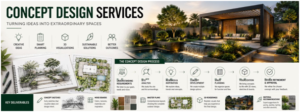
What Are Concept Design Services?
Concept design services involve the process of developing and refining an initial idea into a clear design direction. This stage focuses on understanding project requirements, exploring creative possibilities, and producing preliminary plans or visual representations.
The purpose of concept design is to establish a strong foundation before moving into detailed design and construction phases.
A concept design typically includes:
- Site analysis
- Client consultation
- Design research
- Space planning
- Concept sketches
- Mood boards
- Preliminary layouts
- 3D visualizations
- Material suggestions
- Design presentations
By investing time in concept development, project stakeholders gain a better understanding of how the final space will look and function.
Why Are Concept Design Services Important?
Many projects encounter challenges because planning is rushed or incomplete. Concept design helps eliminate uncertainty by providing a structured framework before construction begins.
Benefits include:
Improved Project Clarity
Concept design helps clients visualize the project and understand how different elements will work together.
Better Decision-Making
Design alternatives can be evaluated before committing to expensive construction work.
Cost Savings
Identifying potential issues during the planning stage helps avoid costly modifications later.
Enhanced Creativity
The concept phase encourages innovative ideas and unique solutions tailored to the project’s objectives.
Greater Project Efficiency
Clear concepts provide direction for designers, contractors, and project managers throughout the development process.
The Concept Design Process
A successful concept design process follows a structured approach that helps transform ideas into practical and achievable solutions. While the exact process may vary depending on the project’s scope and complexity, most concept design services follow these key stages.
1. Understanding Project Requirements
The process begins with a detailed consultation to understand the client’s objectives, preferences, budget, lifestyle requirements, and long-term goals. This stage helps establish the project’s vision and ensures that the design direction aligns with the client’s expectations.
2. Site Analysis
For landscape projects, evaluating site conditions is a critical step. Designers assess factors such as terrain, climate, drainage patterns, sun exposure, existing vegetation, access points, surrounding structures, and environmental constraints. This information helps identify opportunities and challenges that may influence the design.
3. Research and Inspiration
Design professionals gather inspiration, study industry trends, review comparable projects, and explore creative solutions that align with the project’s objectives. This research phase helps generate innovative ideas while ensuring the design remains practical and achievable.
4. Concept Development
Based on the information collected, designers begin developing preliminary concepts and design directions. Multiple options may be explored to evaluate different layouts, styles, and functional solutions before selecting the most suitable concept for further refinement.
5. Space Planning
Space planning focuses on organizing various elements within the available area to maximize functionality, accessibility, and visual appeal. This stage determines how outdoor living spaces, pathways, gardens, water features, recreational areas, and other components interact with one another.
6. Design Visualization
Concept sketches, mood boards, master plans, and 3D renderings are created to visually communicate the proposed design. These visual tools help clients understand the project’s appearance, scale, and functionality before moving into detailed design and construction planning.
7. Design Refinement and Approval
Client feedback is carefully reviewed and incorporated into the preferred concept. Adjustments may be made to layouts, materials, planting strategies, or design features to ensure the final concept meets project objectives before progressing to detailed design, technical documentation, and implementation.
Types of Concept Design Services
Concept design services are used across various industries to transform ideas into structured plans before detailed design and implementation begin. While the approach may vary depending on the project type, the goal remains the same: to establish a clear vision, evaluate possibilities, and create a strong foundation for development.
Architectural Concept Design
Architectural concept design focuses on the overall vision, layout, functionality, and form of buildings and structures. It explores how spaces will be organized, how users will interact with the environment, and how the design aligns with the project’s objectives before detailed architectural planning begins.
Interior Concept Design
Interior concept design develops the aesthetic and functional direction of indoor spaces. This may include space planning, color schemes, material selections, furniture concepts, lighting strategies, and design themes that enhance both appearance and usability.
Product Concept Design
Product concept design transforms ideas into visual and functional concepts before manufacturing. Designers explore product features, user requirements, functionality, and appearance to create prototypes and design solutions that meet market needs.
Landscape Concept Design
Landscape concept design focuses on planning and visualizing outdoor environments such as residential gardens, villa landscapes, parks, commercial properties, rooftop gardens, and recreational spaces. It combines creativity, functionality, and environmental considerations to create outdoor spaces that are both visually appealing and practical.
At Conex Landscaping, our expertise lies in landscape concept design services that help clients visualize, refine, and plan exceptional outdoor environments through site analysis, space planning, master plans, and 3D visualizations before construction begins.
Concept Design Services for Landscape Projects
Landscape concept design combines creativity, functionality, and environmental considerations to create outdoor spaces that enhance both aesthetics and usability.
A landscape concept design may include:
- Garden layouts
- Outdoor entertainment areas
- Swimming pool integration
- Water features
- Pergolas and gazebos
- Soft landscaping services
- Hardscaping elements
- Lighting concepts
- Irrigation planning
- Planting strategies
The goal is to create a cohesive outdoor environment that reflects the client’s lifestyle and complements the property’s architecture.
Key Deliverables in Landscape Concept Design
Professional concept design services typically provide several important deliverables that help clients visualize, evaluate, and refine their outdoor projects before construction begins.
Concept Sketches
Concept sketches are preliminary drawings that illustrate the overall design direction and layout of the project. They help communicate initial ideas, explore different design possibilities, and establish the foundation for further development.
Mood Boards
Mood boards are visual collections of colors, materials, textures, planting styles, and inspiration images that define the project’s aesthetic direction. They help ensure that the design aligns with the client’s preferences and the desired atmosphere of the outdoor space.
Master Plans
Master plans provide comprehensive layouts showing the organization and relationship of various landscape elements, including gardens, pathways, outdoor living areas, water features, and recreational spaces. They serve as a roadmap for future design development and construction.
3D Renderings
3D renderings create realistic visual representations of the proposed landscape design. These visualizations allow clients to better understand the scale, appearance, functionality, and overall look of the project before implementation begins.
Material Recommendations
Material recommendations include suggestions for paving, decking, natural stone, outdoor lighting, planting selections, and other landscape components. These recommendations help ensure consistency in design, durability, functionality, and long-term performance.
Common Mistakes to Avoid During Concept Design
- Skipping site analysis
- Ignoring future maintenance requirements
- Focusing only on aesthetics
- Overlooking climate conditions
- Not considering user needs
- Rushing into construction without proper planning
A well-developed concept helps prevent these issues and contributes to a more successful project outcome.
Why Professional Concept Design Services Matter
Professional designers bring technical expertise, creativity, and practical knowledge to the planning process. They help balance aesthetics, functionality, sustainability, and budget considerations while ensuring the design aligns with project objectives.
For landscaping projects, expert concept design services can significantly improve project outcomes by creating outdoor spaces that are both visually appealing and practical for long-term use.
Conclusion
Concept design services are a critical first step in transforming ideas into successful projects. They provide clarity, reduce risk, improve decision-making, and establish a clear direction for development.
Whether you are planning a luxury villa garden, rooftop retreat, commercial landscape, or outdoor entertainment area, investing in professional landscape concept design services can help bring your vision to life with confidence and precision.
At Conex Landscaping, we specialize in landscape concept design services that combine creativity, functionality, and expert planning to create exceptional outdoor environments across the UAE.
Frequently Asked Questions
What are concept design services?
Concept design services involve developing, visualizing, and refining ideas before detailed design and construction begin.
What is included in landscape concept design services?
Landscape concept design services typically include site analysis, space planning, concept development, mood boards, master plans, and 3D visualizations.
Why is concept design important?
Concept design helps identify opportunities, avoid costly mistakes, and establish a clear project direction before implementation.
How long does the concept design process take?
The timeline depends on project complexity, scope, and client requirements but generally ranges from a few days to several weeks.
What happens after concept design?
Once the concept is approved, the project moves into detailed design, technical planning, and eventually construction.